
A tourism website has a harder job than most SEO advice accounts for. You are not selling a product someone can buy today. You are selling a place, in a season, to someone who lives on another continent and is still deciding whether to come at all.
That changes the mechanics. In 2026, 68% of travel searches start on mobile, and roughly 40% of travellers used an AI tool to help plan a trip in 2025 (Perk, 2026). The research happens early, on a phone, often through an intermediary that summarises rather than links.
This guide covers the four things destination businesses get wrong most consistently, and what to do instead.
Key Takeaways
- Around 25% of travellers plan four or more weeks ahead (Expedia Group, 2025), so seasonal pages must rank months before the season.
- Qualifiers collapse the competition: "Everest Base Camp trek" scores 37 for difficulty, "Everest Base Camp trek cost" scores 8 (Semrush, US database, August 2026).
- Local SEO advice mostly doesn't apply. Your buyers are in another country, so the goal is credibility, not proximity.
- Destination keywords beat business keywords. Nobody searches for your company before they know it exists.
Your customer is not local, and that breaks the usual advice
Most SEO guidance assumes proximity matters. Rank in the map pack, collect local citations, target "near me" searches. For a tourism business, almost none of that drives revenue, because the person booking is 7,000 km away and will never type "near me" about your destination.
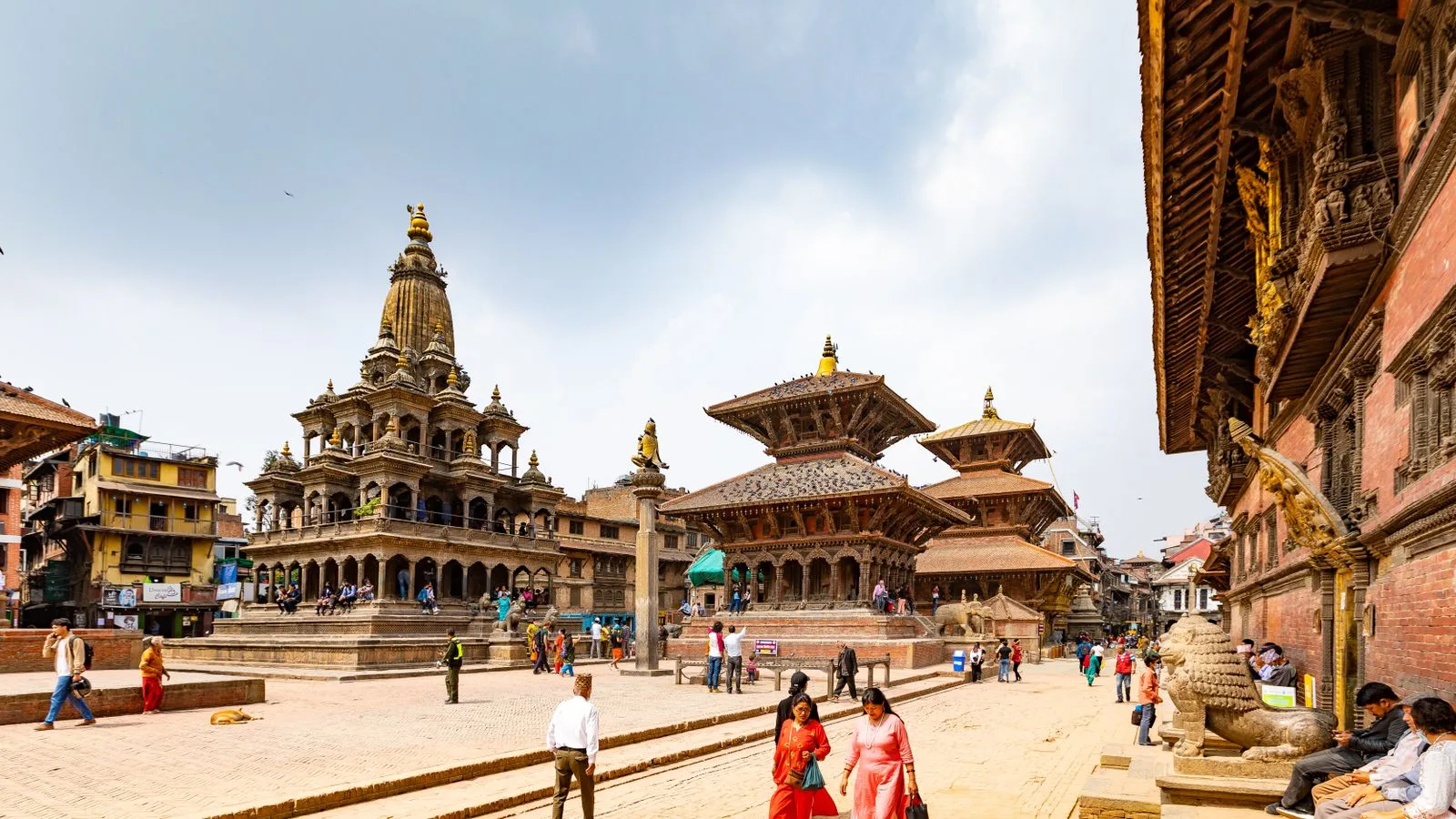
What proximity signals actually do for you is establish that the business is real. A verified Google Business Profile, a consistent address, and a registered tourism licence number tell a nervous traveller in Manchester that the company in Kathmandu exists. They also help Google trust an unfamiliar domain.
So keep the local signals, but stop treating them as a traffic strategy. The traffic comes from destination and activity queries, and those are won with pages, not citations.
Our finding: The single most common structural mistake we see on tourism sites is a homepage optimised for the company name and nothing else optimised at all. The brand is the one term the business already ranks for, and the one term nobody searches until after they've decided.
Sell the place before you sell the business
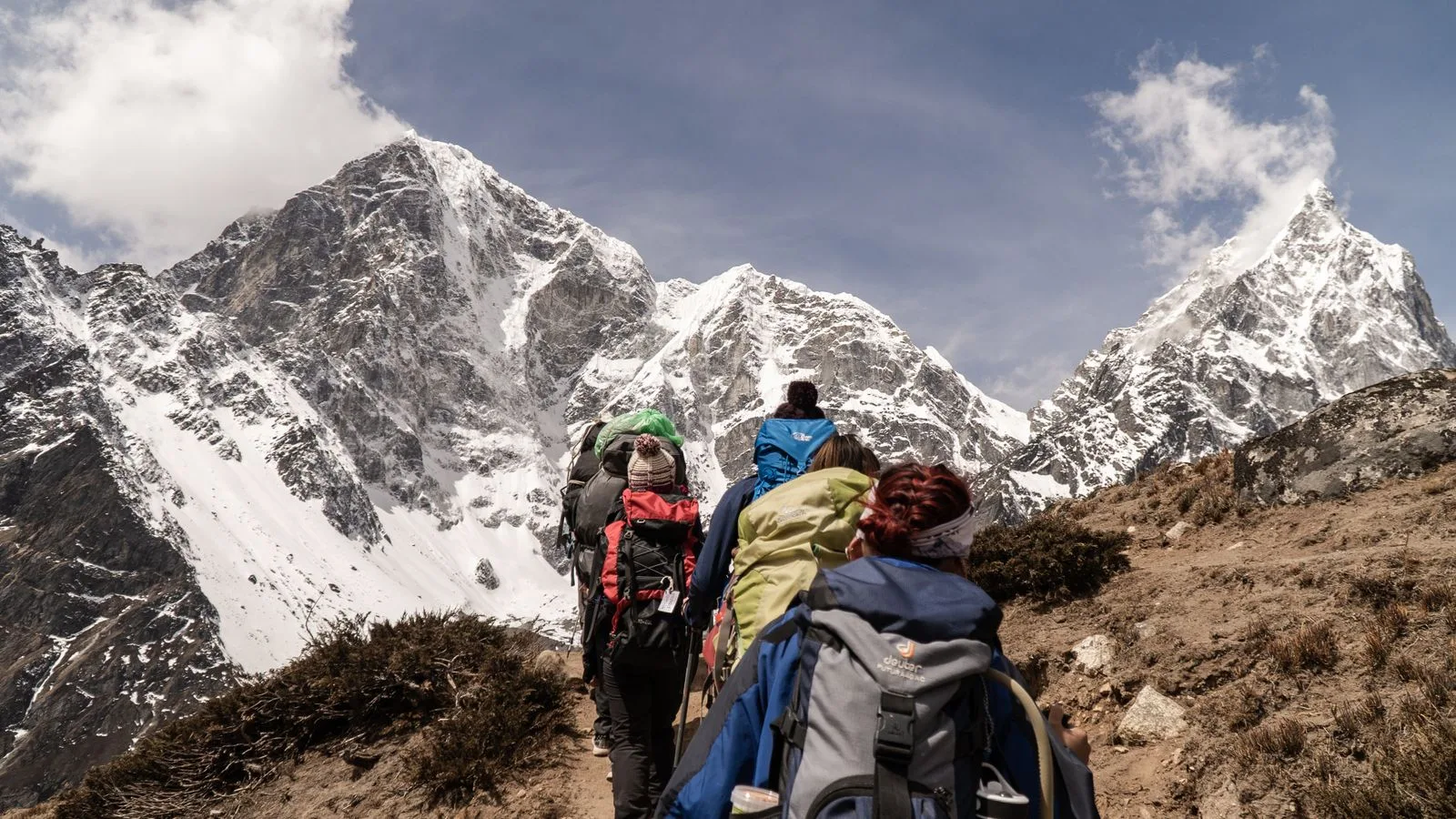
A traveller researching Nepal does not search "Deitysoft Treks". They search "best time to trek Annapurna", "Everest Base Camp difficulty", or "Nepal visa on arrival". Those are the queries that exist in volume, and they all happen before your business is a candidate.
Build pages for the decision, not the transaction:
- The destination itself, with what makes it worth the flight
- Each season, honestly, including the bad ones
- Costs, in the currency your buyers actually use
- Entry requirements, permits, and how long they take
- Difficulty, fitness, and who should not attempt it
That last one converts unusually well. Telling someone a trek is unsuitable for them builds more trust than any testimonial, and the people who self-select out were never going to book happily anyway.
Each of those pages should link to the trips you actually sell. That's the conversion path: research page earns the visit, trip page earns the booking. For the structural side of that, see our guide to SEO for tour operators.
Seasonality is a publishing schedule, not a content topic
Tourism demand arrives in waves, and search rankings do not. A page published in October will not rank in October. It ranks in January, if it ranks at all.
Work backwards from the season. If your Nepal trekking peak runs October to November, the pages targeting it need to be live and indexed by June or July. That gives Google time to crawl, index, and test the page against competitors before demand arrives.
The practical rule we use: publish seasonal content one full season ahead, then update it rather than replacing it. A page for "best time to trek Annapurna" that has existed for three years and gets refreshed each season will outrank a fresh page every time, because age and accumulated links are real ranking factors that no amount of new writing substitutes for.
Refresh means updating the specifics: this year's permit costs, current teahouse conditions, changed flight schedules. It does not mean rewriting the page and changing the URL, which throws away everything the page has earned.
What AI assistants change for destination content
Travel is one of the verticals AI Overviews expanded into most aggressively, growing 381% after Google's March 2025 core update. The click impact was severe and then partially recovered: Seer Interactive's study of 2.43 billion impressions found CTR on AI Overview queries fell to 0.61% by September 2025 before returning to 2.4% by February 2026 (Seer Interactive, via SeoProfy, 2026).
Queries without an Overview still earn about 3.8%. That gap is the new baseline, and destination research queries are exactly the kind that trigger Overviews, because they are informational and have a factual answer.
The response is to write the factual answer plainly enough to be quoted. Compare these two:
| Weak for extraction | Strong for extraction |
|---|---|
| "Permit costs vary by route and season." | "The ACAP permit costs NPR 3,000 and the TIMS card NPR 2,000, as of August 2026." |
| "The trek is suitable for most fitness levels." | "The trek covers 8 to 15 km per day at altitudes up to 5,416 m, with no technical climbing." |
| "Weather can be unpredictable." | "October averages 12 clear days; July averages 3." |
The right-hand column gets cited. The left-hand column gets ignored, because it contains no information a summariser can carry.
Specific numbers also date-stamp your content, which sounds like a liability and is actually an advantage. A page that says "as of August 2026" signals maintenance. One that avoids numbers entirely could have been written in 2019.
Photography is a ranking asset you already own
Tourism businesses sit on something aggregators cannot buy: original photographs of the place, taken this season, by people who were there.
Use them properly. Compress to WebP, size them to the space they occupy, and write alt text that describes the actual scene rather than stuffing keywords. "Trekkers crossing the suspension bridge below Namche Bazaar in October" is useful to a screen reader, to image search, and to a crawler trying to understand the page. "nepal trekking tour package best price" is useful to nobody.
Stock photography actively hurts here. A traveller who has spent three weeks researching Nepal recognises the same five Shutterstock images across a dozen operator sites, and the effect on trust is immediate. Your worst original photo beats the best stock image, because it proves you were there.
There is a technical floor to respect too. Images are usually the heaviest thing on a tourism page, and with most searches happening on mobile, a 4 MB hero image is a ranking problem rather than a design choice.
Where tourism sites lose the booking
Traffic without enquiries is the most common failure mode, and it usually comes down to three things that have nothing to do with rankings.
Prices are hidden. Travellers comparing operators need a number. Without one they move on to the site that shows one, which is frequently an OTA charging more than you.
The enquiry form asks too much. Nobody researching a trip six months out wants to supply a passport number. Name, email, rough dates, and a question is enough to start.
No proof the company is real. Registration number, physical address, named guides, dated photographs, and reviews. International travellers sending a deposit to an unfamiliar country are looking for exactly these, and their absence is disqualifying regardless of how good the content is.
Start with one destination page
If your tourism site has a homepage, a contact page, and little else, the highest-value thing you can do this month is publish one genuinely useful page about your primary destination, targeting the research question your customers actually ask.
Not a brochure. A page that answers cost, season, difficulty, and requirements with real numbers, illustrated with your own photographs, updated with a visible date.
That one page will teach you more about your search demand than any amount of planning. And when it starts pulling enquiries, you'll know exactly what the next nine pages should be.
We build and rank websites for tourism, tour, and trekking companies from Kathmandu. That is what our travel SEO service does, month by month. If you want a look at where your site is losing traffic, get in touch.